ARTICLE
Berlin's Mauerpark: the beauty of embarrassment
25.04.2026
/
15 min.
by
Federico Maggi
Share Article
A warm Sunday, a thousand strangers, and a lesson to remember.
June 2023. Berlin had been on my mind for a while.
At the time I was living in Stuttgart for an internship, and when my twenty‑fourth birthday came around, I decided to gift myself a cheap FlixTrain ticket and a long solo weekend in Berlin. I was set to arrive on Thursday evening and leave on Sunday night. No itinerary or checklist, just a few saved recommendations and a quiet promise to walk as much as my legs would allow.
Even before I got there, the city already had its hold on me. All those things people say about it: rave culture, multicultural energy, abandoned warehouses turned into temporary exhibitions, a place that whispers come find (or lose) yourself here. Add to that countless histories layered on top of each other, and it felt like the right place to go. Looking back, I think I just wanted to step into a place that didn’t pretend to have it all together, maybe because I didn’t either. At that age, everything felt possible but nothing felt built yet, and from the little I knew about Berlin it somewhat seemed to be able to live quite comfortably in that limbo.
Friday afternoon, one of those suggestions led me to a spot in Kreuzberg. It had been recommended by my back-then flatmate’s boyfriend, who lived nearby and talked about it with the kind of reverence people usually reserve for their fondest childhood memories. The place was small, Vietnamese, nothing fancy. I grabbed a seat on one of the benches outside, lit a cigarette, watched the light smear across the buildings, and ordered a Saigon beer with one of the daily specials. When the food came, the bowl was much bigger than expected: glass noodles in coconut curry sauce, mushrooms whose name I’ll probably never learn, crushed peanuts, coriander, and two fresh slices of bell peppers sitting on top. As simple as it was, it somehow tasted like Berlin in a mouthful: spicy, bold, and honest (and almost suspiciously cheap).
Shortly after, a couple of locals around my age sat on the same bench. A few words about the dish became a conversation, and soon enough we were swapping stories and tips like we’d known each other for ages: restaurants, flea markets, gallery basements, second-hand camera lens shops, and clubs that may or may not exist depending on the night. Then, right before leaving, one of them said: "If you’re here Sunday afternoon, go to Mauerpark." I don’t know why I didn’t ask for any explanation, but I’m glad I didn’t: some things are better discovered than explained.
A city of contrasts
That weekend the weather in Berlin was perfect.
Early June, blue sky, bright sun, gentle breeze. The city felt alive in a way that I can’t quite put into words: cyclists everywhere, people sitting by canals, music drifting from open windows, and at some point I even spotted a group of completely naked (and likely drunk) college students taking a dip in the middle of it all, without the slightest care in the world. You know, those days that make you fall a little more in love with life just by walking through it. And walk I did: by Sunday evening, my step counter said 120,000 steps in four days, all in a pair of brand new loafers (not my greatest idea, as my blisters would later testify).
Walking is my favourite way to discover a city. I don't particularly care if I miss half the places that travel bloggers insist are "unmissable" (slightly ironic, I know, given what I'm doing right now), walking forces you into unexpected situations. It makes you notice things that would otherwise remain invisible, may that be a café that wasn't on your list, a street you didn't plan to visit, or a quiet neighbourhood where people actually live their lives rather than performing them.
And Berlin, I would find out that weekend, was the perfect place for that. In many cities I've visited, urban life is carefully curated, with the rough edges pushed out of sight for the sake of appearances. On the contrary, Berlin doesn't seem particularly interested in doing that. You might see someone shooting drugs in a park while a young family with a stroller walks past as if it's the most ordinary thing in the world. A clearly intoxicated man arguing with a wall (oddly enough these are some of the times I wish I knew German the most) one bench away from a young couple's nervous first date. Old intricate architecture standing right next to brutalist concrete blocks that look like they were designed by someone with a personal vendetta against decoration.
When most cities try to look their best for you, Berlin doesn’t even seem to bother trying. Maybe that’s why it felt so special. It’s messy, sure, sometimes even unsettling, but deeply human and unbelievably honest with itself and its people.
Flashbacks
By the time Sunday came around, Mauerpark had been sitting in the back of my mind for a couple of days.
On my way there, I decided to stop by a food truck I had noticed the night before in Prenzlauer Berg to grab what, to this day, still are the best al pastor tacos I've ever had in Europe. Something so delicious that, for a moment, it teleported me back to my exchange year in Nevada, back in 2016. Picture Anton Ego's flashback to his mother's ratatouille, except instead of a future critic in a suit, it's a (badly) bleached seventeen-year-old version of me, and the one preparing the food is some Mexican kid’s mom who clearly didn’t believe in mild spice. But this is a story for another time.
A couple years later I would come back to the same place, this time with my dear friend Diogo, whom enjoyed it so much he would bring his whole family during another short visit to the city. If you think about it, food has wonderful ways of connecting people and shortcutting time.
Mauerpark
Once at Mauerpark, my first impression was overwhelming in the best possible way.
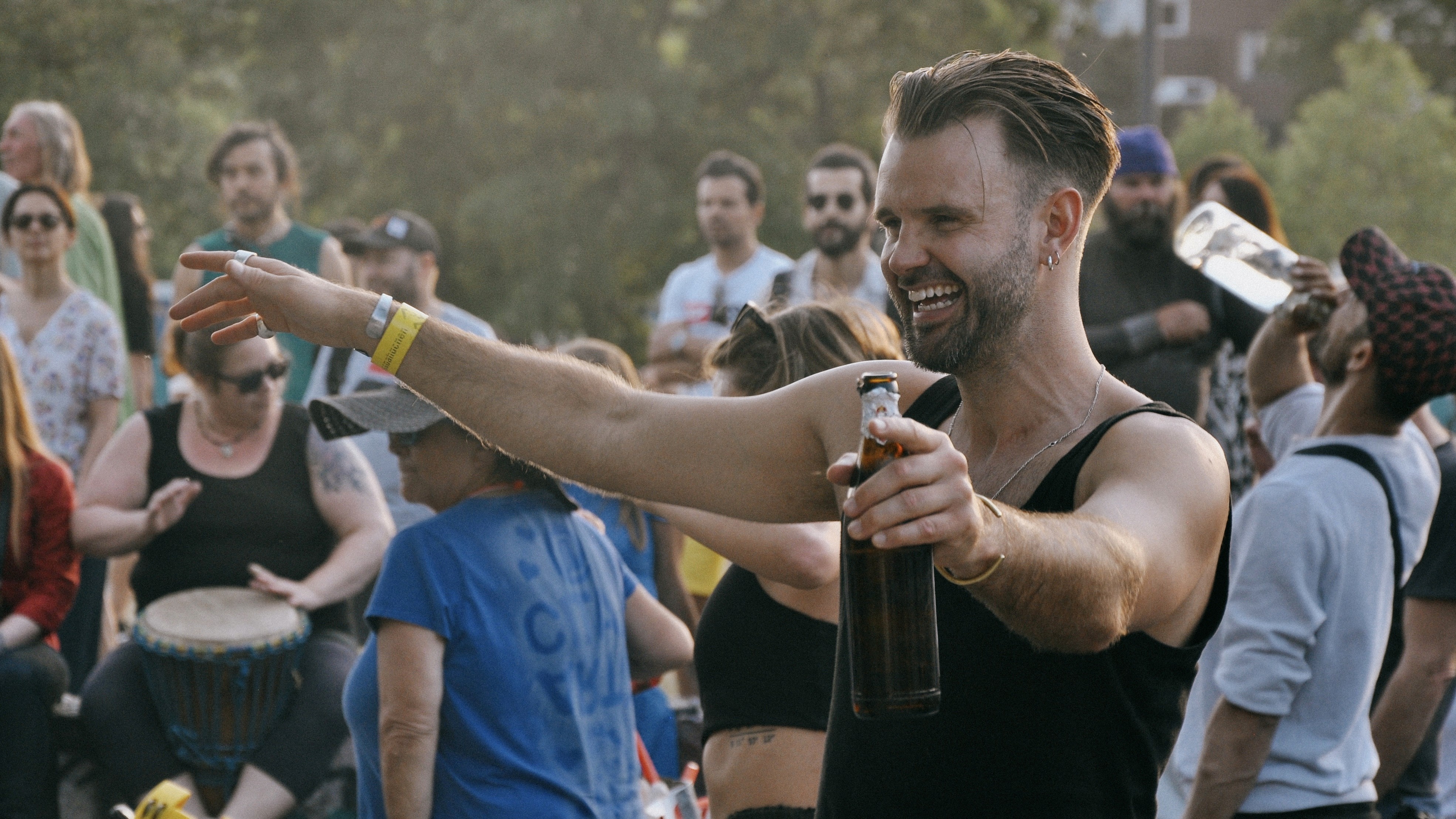
The park wasn't exactly what I had expected. The grass was patchy in places, empty beer bottles scattered around, and graffiti on every surface, uneven and unpolished in the way only a place that actually belongs to its people can be. Everywhere I looked, something was happening: kids kicking footballs, rookie DJs mixing tracks from portable setups, groups sitting in circles on the grass, beers sweating in their hands. A couple of old men were juggling oranges to the rhythm of techno, and a nearby group of what seemed a Woodstock flower child band played tribal drums, surrounded by even more improvised dancers. Dogs wandered freely, pigeons did whatever pigeons do, and the smell of warm grass, grilled food, and weed (a lot of weed) filled the air.
I would later learn that the park once sat on the “death strip” (the no-man’s-land by the Berlin Wall), yet it was now full of the most diverse groups coming together to celebrate life. A place once designed to separate people, now stitching them together: sometimes the jokes really do write themselves.
Absorbed by all those characters, at some point I heard a loud cheer coming from not too far west, which I obviously decided to follow.
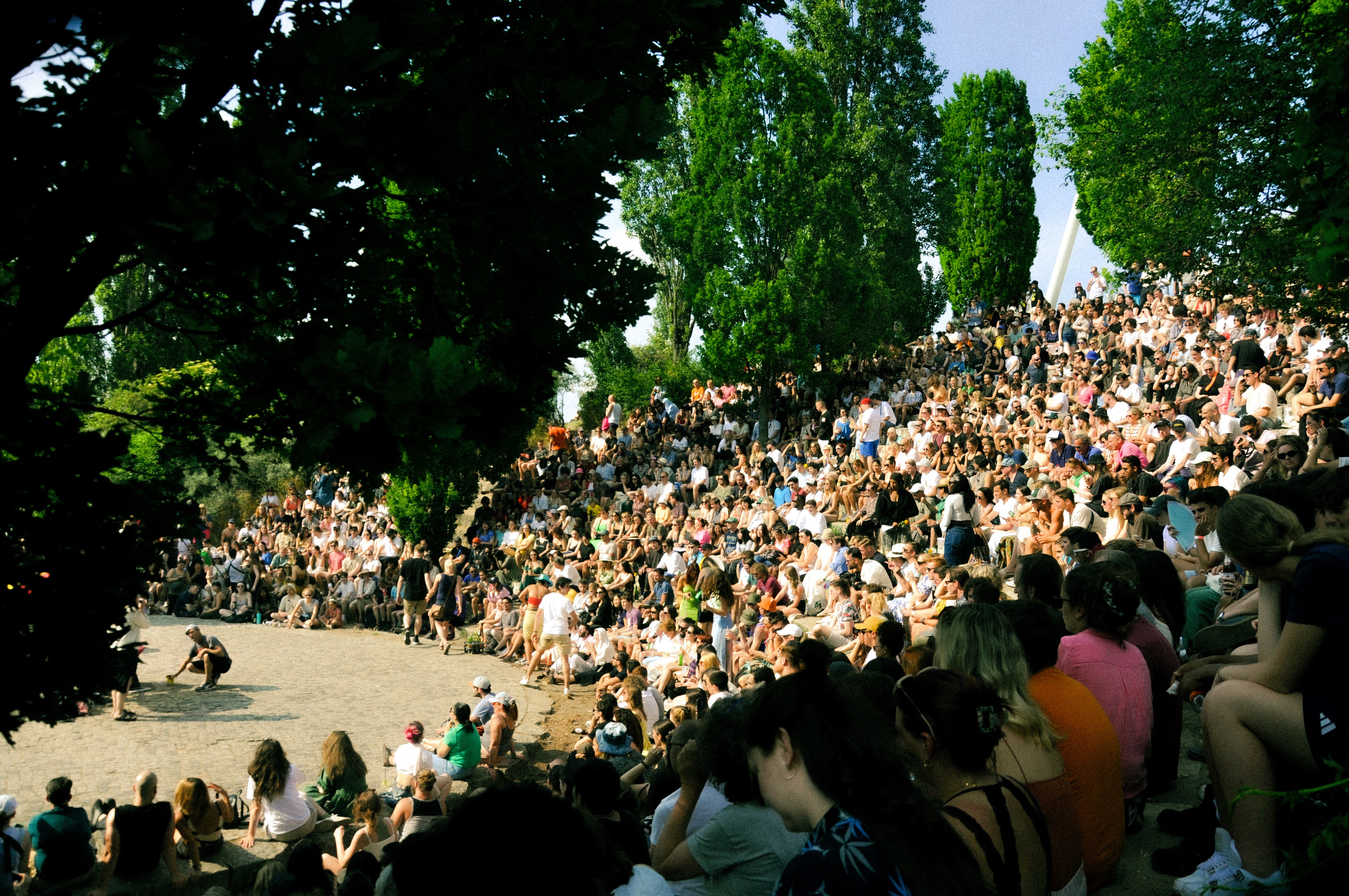
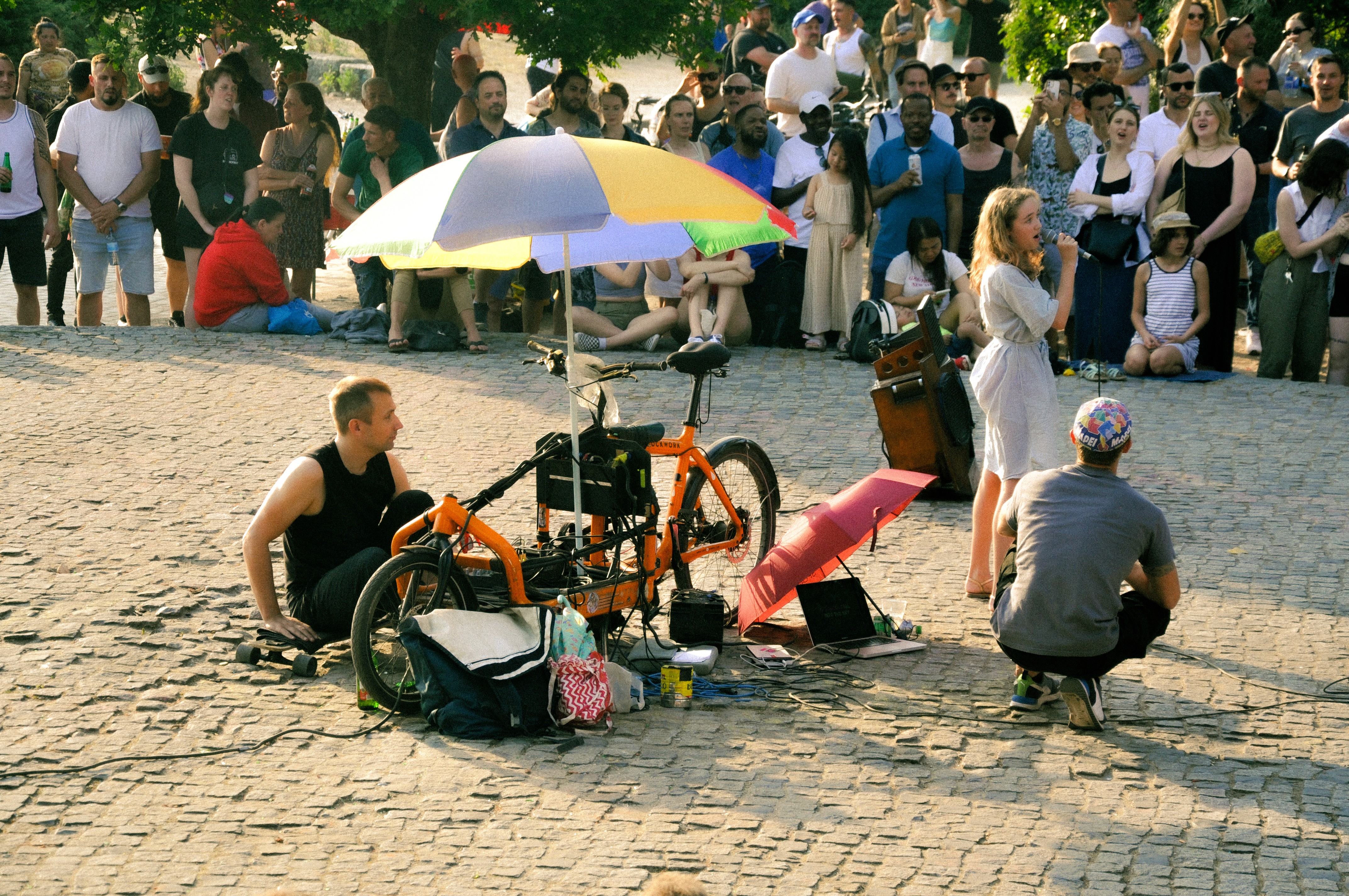
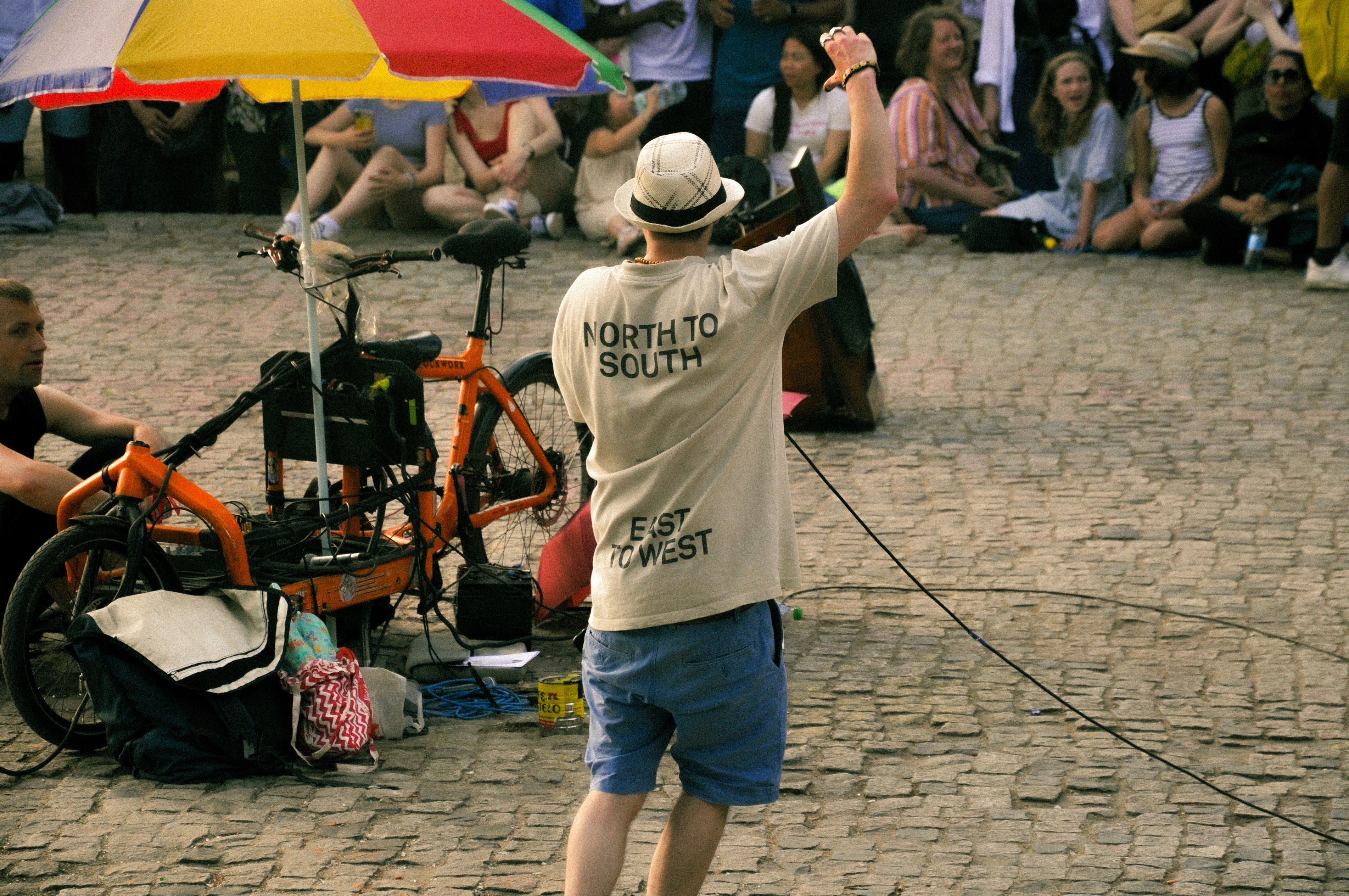
A couple minutes later, the park opened into a concrete amphitheatre carved into the hill. Not exactly what I was expecting to find in the middle of a public park, but that somehow made perfect sense at the moment. At the centre of it were two men with a pretty unusual setup: an old bicycle, a rainbow beach umbrella attached to its frame for shade, a massive speaker, a laptop and a wired microphone. The whole thing looked both ridiculous and brilliant, which immediately made me want to take a seat and see what was going to happen.
A few minutes later, one of them grabbed the mic and explained what - like every Sunday afternoon for the past fifteen years or so, weather permitting - was going on: Karaoke.
For the next few hours, anyone brave enough (or blissfully unaware of how terrifying public performance can feel) could walk down the steps, pick a song, and sing it in front of several hundred complete strangers. Sounds insane, right? And yet people did, lots of them.
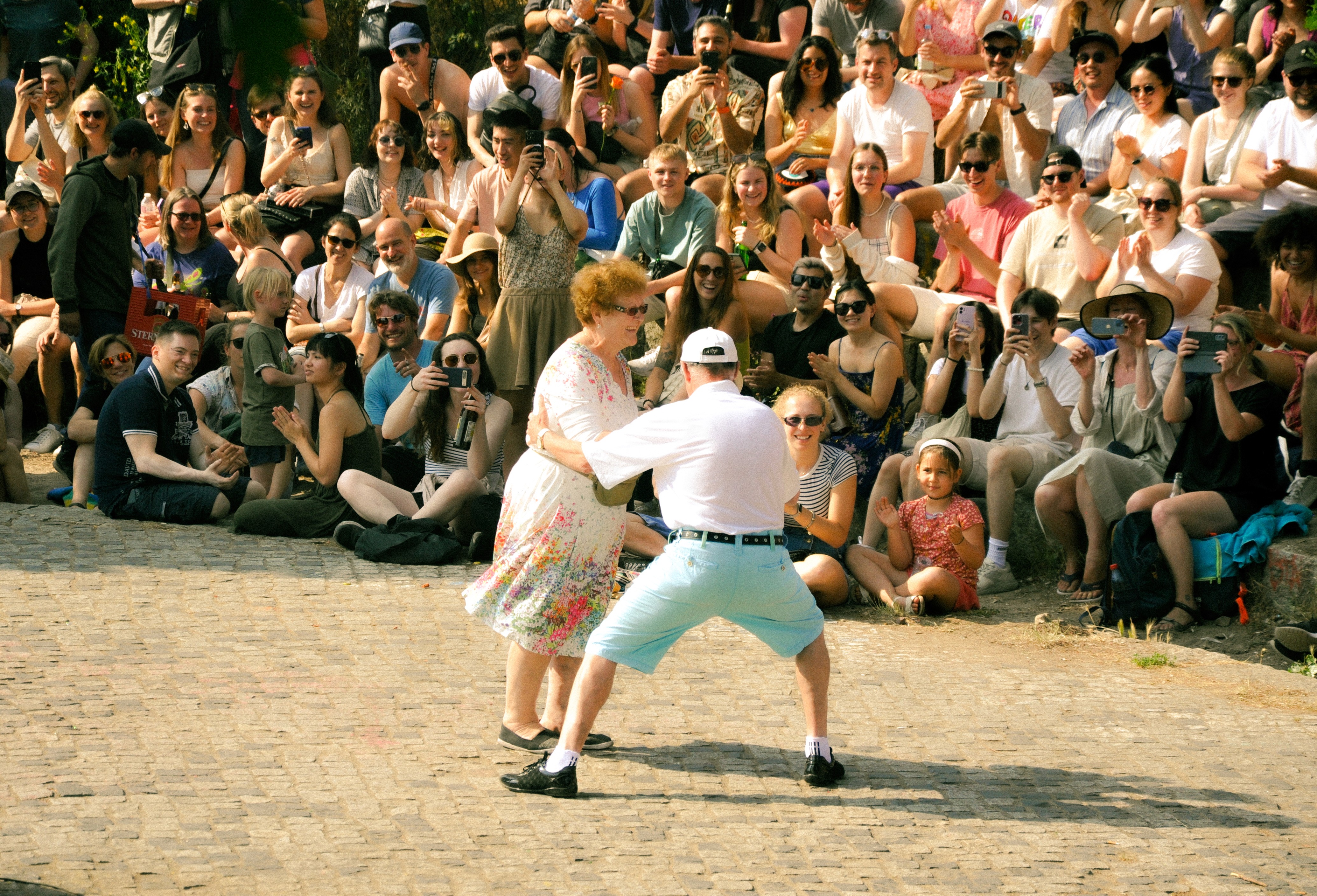
Among the many performances, I vividly remember a ten‑or-so-year‑old girl singing Imagine with a bravery most adults (me included, to be fair) would probably outsource to alcohol, the whole crowd tagging along; a group of latinos turning the stage into a reggaeton dance floor, and a limping Berliner singing an old German song with so much passion it would make any professional athlete and their national anthems pale in comparison. Throughout the whole show, an elderly couple (which seemed to be coming straight from a golf course) danced to every single song on stage. No matter the type of music, whether it required an individual performance or a duet, they absolutely stole the show, which everyone loved.
Some people were honestly impressive, others were terrible to say the least. It didn’t matter: the crowd clapped, cheered, encouraged and laughed with each one of them.
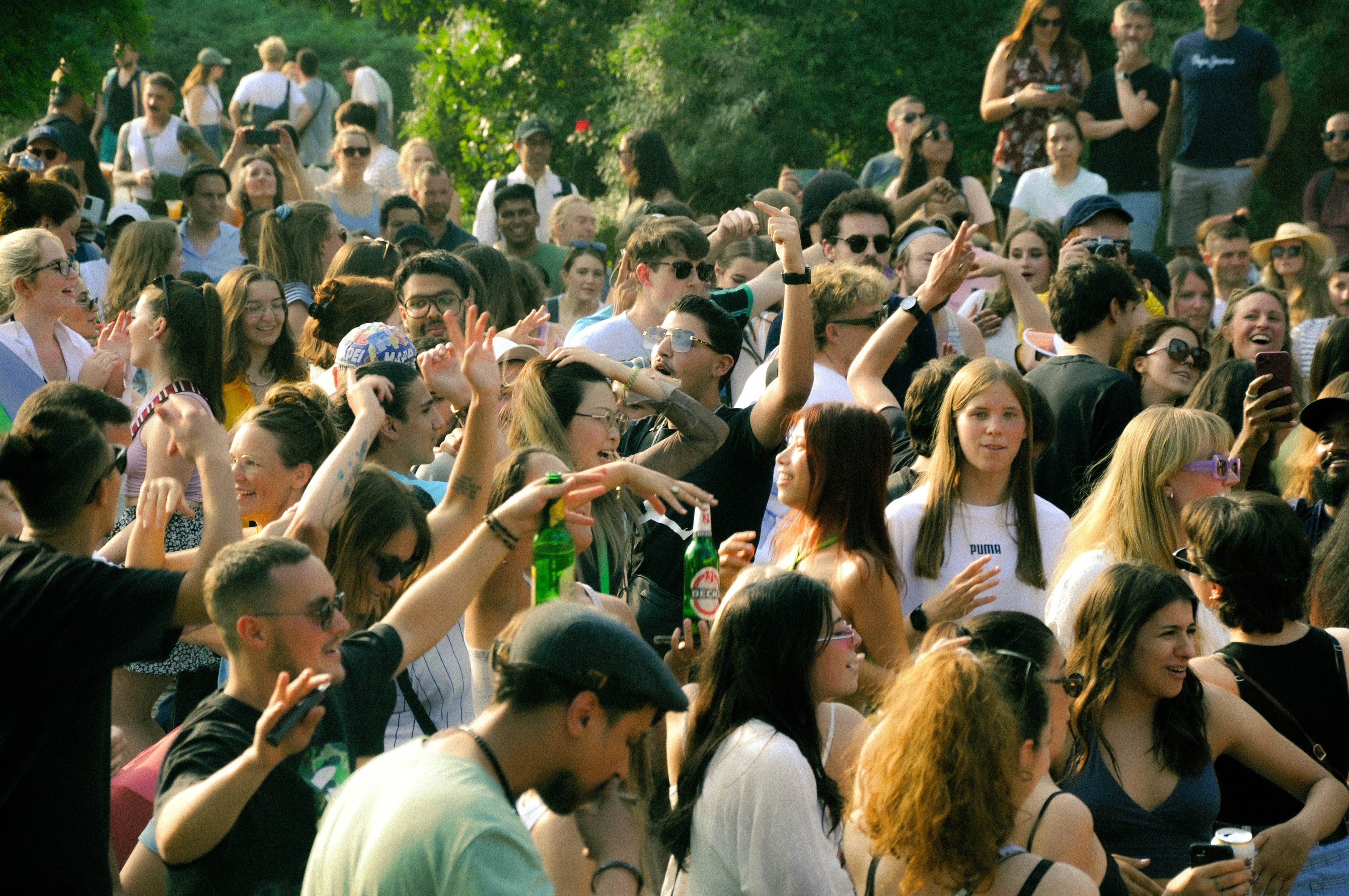
I remember sitting there, with the sun warming my back and hundreds of voices rising and falling together, and feeling a very simple but powerful thought settle in: I was unbelievably happy.
The closest comparison I can think of is the feeling of being at a concert of an artist you’ve been waiting to see live for the longest time, except here the crowd was the artist, and everyone was part of the performance. It slightly reminded me of Freddie Mercury’s historic performance in Live Aid 1985, where the endless crowd goes wild at the rhythm of “Ay-Oh”s (if you have never seen it, please do yourself a favour and look it up).
Now, you might be wondering: did I go down and sing? Hell, no. Do I wish I did? Well, yeah. I thought about it many times. At some point the energy made it feel almost possible, but then my chest started pounding like crazy, and my legs suddenly felt like they weighed a ton. So I stayed exactly where I was, watching in awe from the safety of my seat.
Still, I have huge respect for every person who did go down. Especially the terrible singers and the awkward dancers, because it takes real courage to stand before a thousand strangers and put yourself in the position to potentially embarrass yourself completely. And maybe that’s the whole point.
The treasure at the bottom of the steps
For a long time I wasn’t quite able to put into words why the whole experience felt so special to me, until some time ago I came across an episode of Subway Takes, one of my favourite YouTube formats. The name itself is kind of self-explanatory, but the concept is simple: more or less famous personalities sit in New York's metro and share their thoughts on any topic, controversial or not. Some of those opinions sure are peculiar (to say the least), but, no matter where you stand, I can only recommend checking it out. Not only it is honestly fun, but some takes can really give you a different perspective on things.
Back to our point, that particular episode featured Austin Butler, who said something that caught my full attention.
“Embarrassment is an under-explored emotion. Go out there and make a fool of yourself.”
Now, I don’t know if it’s also the way he delivered it that sold it to me (after all, we are talking about a Hollywood star), but something clicked into place, and my mind instantly brought me back to that Sunday afternoon at Mauerpark.
Embarrassment is one of humanity’s most invisible prisons. It is something that most people fear, and which constantly keeps us from trying new things or freely expressing ourselves. We build entire lives around avoiding it. We don't raise our hands, don't speak up, don't dance, don't sing, don't try. All because somewhere deep down, we're terrified of looking foolish in front of people whose opinions, statistically, will matter to us for approximately zero seconds of our actual lives. And yet we do it (or better yet, we don’t do it, whatever it may be). The scariest part is, you live long enough in the fear of looking wrong, moving wrong, being too much, and you start to forget who you actually are, what you even like when no one’s looking.
Think about the people you most look up to or love spending time with. Chances are, you’ll think of someone that is authentic and unconventional, maybe even a bit unhinged, but that doesn’t let embarrassment get in the way of truly expressing themselves. Personally, I like people with a little edge to them. Everybody is different and weird in their own ways, and to me it feels like such a damn waste of our borrowed time here to be afraid of showing our very own personalities. In a world full of nonchalants and NPCs (Gen Z will understand), I believe breaking those patterns is the greatest act of freedom and self-love one can do.
And that freedom, especially in Berlin, doesn’t stop at the park or when the sun goes down.
Some people love to reduce the city to its parties as if it were just a playground for lost souls and bad decisions. But even there, raving culture’s true power stands in the sense of safety it builds around its chaos, the idea that you can exist without categories. No rich or poor, no queer or straight, no right or wrong. Just bodies sharing space, stripped of performance. The way I see it, this is more of a temporary correction of reality than an escape from it. A world that doesn’t need perfection or social norms to offer belonging, one where the music is the only language, and nobody asks where you learned it.
Getting back to Mauerpark, I still think about it from time to time, mostly when I catch myself holding back from things that don’t really matter.
As you know, I never sang that day. But I've carried that memory with me ever since, like a reminder that somewhere, at any moment, there's an invitation to stop watching from the stands and walk down into the arena.
Next time I’m on those steps, I might just go for it. And when I do, I hope my voice cracks. I hope I forget the words. I hope I look ridiculous.
Because that's the whole point.
Other Articles
More to read